CHANGELOG
What's new
Releases for the self-hosted, agent-native deployment platform. Newest first.
v2.21July 2026latest
- Multi-language builds (Nixpacks). Deploy apps in any Nixpacks-supported language — Python, Go, Ruby, Rust, PHP, and more — not just Node.
- Scheduled off-site S3 backups. Automated recurring backups of the whole system to S3-compatible object storage, for real disaster recovery.
- Per-app resource graphs. Live CPU and memory charts per app and environment, right in the dashboard.
- Sidebar overhaul + owner-scoped notifications. A redesigned nav with apps, Manage, and Settings in the sidebar; app owners get notifications scoped to the apps they own.
- AGPL-3.0 + dual licensing. Licensing reconciled to GNU AGPL-3.0, with a commercial dual-license path for teams that need it.
v2.15–v2.20June–July 2026workflow
- Multi-app tabs. Open several apps in persistent, always-alive tabs — switch between running apps without reloading their iframes.
- Requests workflow, unified. A single role-scoped Requests page (My Requests folded in), grouped daily HTML digests, and request-fulfilled emails signed with who shipped the fix.
- Deeper SCIM. Inherit department, region, and location from your IdP via SCIM — richer identity for access rules and reporting.
v2.12–v2.14June 2026navigation
- Sidebar-native launcher. Apps moved into the sidebar nav with a per-environment version pill, plus a Manage page for app owners.
- Post-login What's New. AppCrane surfaces a changelog-sourced "What's New" after login and on upgrade, so teams see what shipped.
v2.11June 2026mcp naming
- AWS-aligned MCP naming. The MCP tool vocabulary now mirrors AWS / Copilot conventions to cut switching cost: the sandbox/production dimension is
stage(wasenv) across every env-taking tool, env vars are secrets (appcrane_set_secret/appcrane_get_secret), andappcrane_cpreplaces the old upload name. Old names keep working via aliases — existing agents don't break. - Large code files into managed apps.
appcrane_push_to_managed_appcan commit big files via a staged upload token instead of inlining the bytes — reliable well past the ~100 KB point where inline content used to truncate or corrupt.
v2.10June 2026domains
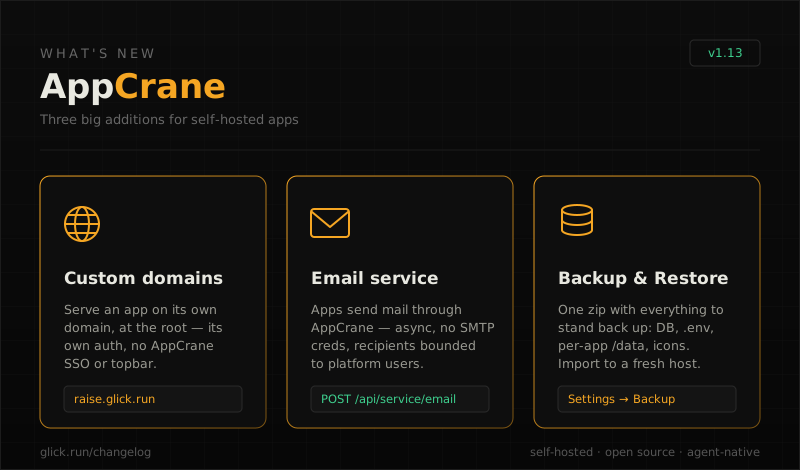
- Custom domains. Serve an app on its own domain (e.g.
app.example.com) at the root — its own authentication, no AppCrane SSO or topbar. AppCrane stays the deploy / GitHub / upgrade layer; only public serving changes. TLS auto-provisioned. - Self-healing managed apps. A half-created app (record exists, repo missing) now re-provisions its repo on a repeat create — agents recover without manual cleanup.
- Large binaries to /data. Agents stage multi-MB files (installers, datasets) and push them straight into a container's persistent volume over MCP.
v2.9June 2026backup
- Config backup & restore. Package the entire system into one zip — database, secrets (including the encryption key), per-app
/datavolumes, and icons — then import it onto a fresh host. One click in Settings → Backup.
v2.8May 2026email
- App email service. Hosted apps send email through AppCrane (via Microsoft Graph) — async, server-side, automatically retried, with recipients bounded to registered platform users. No SMTP credentials in the app; the sender name defaults to the app's name.
v2.7May 2026identity
- Signed identity headers. Authenticated requests carry the signed-in user (email, name, global + per-app role) via
X-AppCrane-*headers and/api/me— apps know who's calling with zero round-trips. - Headless apps & per-path SSO bypass. Expose a single endpoint (e.g. a WebSocket) without SSO while the rest of the app stays gated.
- Configurable role permissions. A per-app role matrix for who can deploy, manage env, ship requests, and delete.
- First-class scheduled jobs & /data persistence. Declare cron jobs in
deployhub.json; a per-app/datavolume survives every redeploy as the canonical place for app state.
v2.6April 2026managed
- Managed apps. "AppCrane manages my code" — the platform creates and owns a private GitHub repo via a service account, so users without a personal access token never touch github.com.
- Supply-chain verification. The deployed commit SHA is checked before the container swap.
- SSO-only login & MCP write gates. First-class SSO sign-in and tightened create/write permissions for agents.
v2.5April 2026platform
- Expanded MCP tool suite. ~35
appcrane_*tools — create, deploy, env, logs, releases, rollback, access control, and file/data operations — plus a blocking deploy-watch. - MCP-only for agents. The legacy agent-facing REST surface and static agent guide are retired; MCP is the single control plane.
- On-demand playbook. Agents fetch current operating guidance via
appcrane_get_guide.
v2.0 and earlierJan–Apr 2026foundations
- MCP server. Bring your own agent (Claude Code, Cursor, Codex, Claude Desktop); per-user MCP tokens with token-bound audit logging.
- Four-role security model, Docker isolation, enterprise SSO (SAML/OIDC/SCIM), dual environments, auto-HTTPS, zero-downtime deploys.
AppCrane — self-hosted · open source · agent-native
github.com/gitayg/appCrane ↗
glick.run — AGPL-3.0